Showing posts with label New Zealand. Show all posts

Saturday, January 24, 2009

On to Permanent Residency (Updated)

It's been a little over two years now since we first set foot in New Zealand. Time for immigration paper works again this time looking at applying for Permanent Residency. Again, depending on which category you come to NZ determines the right time to apply for PR. As for us, we're on the Work-To-Residence Permit under Talent (Accredited Employer) stream. So basically I simply have to stay employed with the employer or other employers as long as I'm granted "Variations of conditions" for up to 2 years then I'll be eligible for PR.

You may think that 2 years is quite a long wait to become PR, well, compared to a regular "Work Permit", we don't have to go through "Expression of interest", "Points assessment" and eventually "Invitation to apply" type-of-thing. I simply have to submit the necessary papers that show I have stayed employed for a valid employer under valid conditions (minimum salary required, permanent, on-going, genuine, at least 30 hours per week, etc.). After submitting all the necessary requirements, it takes up to 3 months for processing then we'll have to pay a Levy and that should complete the process.

Here's the list of the requirements that we need to accomplish in order to lodge our application:
  1. Letter from employer showing that the base salary meets the minimum requirement. (Dated not less than 1 month).
  2. Letter from employer showing that the contract is on-going, genuine, at least 30 hours per week, etc. (Dated not less than 1 month).
  3. Complete medical examination and chest x-ray results of not less than 3 months at time of application.
  4. Police certificates from all countries we have lived for more than 12 months in the last 10 years. Since I come from the Philippines, they require both the local Police Clearance and the NBI Clearance. (Dated not less than 6 months.)
  5. 700 NZD for the application fee.
  6. English proficiency requirements for my partner: (a)Letter from the University of San Carlos; (b) Letter from current employer.
We had our medical and x-ray exams on the first week of December 2008. It cost us a fortune as it is quite expensive. It took about a week for the results to be available and thank God, everything is normal. Actually it was a 3 step process; it goes something like this:
  1. Setup an appointment with the Medical Center. Here we brought our partially filled-up medical forms to the nurse; the other details are filled-up during the appointment.
  2. Go to a laboratory to get blood tests and x-ray done. The results usually takes up to a week to be available.
  3. Once the results are available, they are sent directly to the Medical Center and we are notified about it and then we setup another appointment, this time with a doctor. In this appointment, the doctor does some final physical checks and goes through the results with us. He then signs it and puts it in a sealed enveloped for us to take home.
When we had our medical exams in the Philippines before, at Velez Hospital, they did not give us the chance to see our results. They gave it to us in a sealed envelope already. The doctor here told us that why would the results be hidden from us, after all, it's too personal for us.

The requirements from my employer, the letters, were no big deal. However, it is wise to get them later as they need to be dated not less than 1 month during which the application is lodged.

We also got a letter from the University of San Carlos for my partner confirming her degree and that the medium of instruction used is English.

The trickier part of this whole process is the NBI and Police Clearance from the Philippines. Well, as always, or should I say, "as useless", it takes ages to get these documents even the requirements for these documents themselves are quite a mission to get hold of. You will need cedula, birth certificate, 2x2 photos and the payment, of course -- you know, the usual inefficiencies in our government processes.

The trick here is to get these documents way way way ahead of schedule. In our case, the NBI clearance actually has cost us dearly. It cost me money and time and effort too.

Since I don't have any recent NBI clearance on hand, (I did have one 6 years ago which I couldn't find anymore, that's when I got my passport), I have to fill-up a new NBI finger-print form. In short, my sister-in-law has to mail the form to me then I'll fill it up in the local police station here and then mail it back. Then to top things up, I had "a hit". That means I have to wait for another 1 week for their computer to decide that I'm cleared. Yes, they literally wait on the computer; the Philippines is high-tech you see. :-?

Anyway, finally my name was cleared, so I should then have my clearance shoudn't I?? But wait, there's more! They ran out of ink! Can you believe that?? Well, maybe that's understandable as maybe someone was printing some wedding invitation letters during that time. Oh well...

Finally we got our NBI clearances and our application is now with Immigration. Fingers-crossed, hopefully everything will go well.

Some tips to prevent inadvertent delays:
  • Make sure you have all the necessary requirements. Call up the immigration office when in doubt. Don't just listen to what other people are saying. Do your homework.
  • Pay attention to the dates and times. The medical/x-ray certificates need to be less than 3 months old upon submission. The police/NBI clearances need to be less than 6 months old. The letter from the employer needs to be 1 month old.
  • Request for the Philippine documents ahead of time. As you can see, police/NBI clearances first. Also if you need to request docs from the University, get them early as well.
  • Go through and fill-up the application form carefully. Read all of the inlined instructions and make use of the checklist provided. When in doubt, consult the guide or better yet call the immigration office.
  • Don't forget to sign the application form. Remember that everyone that's included in the application that's more than 17 years old must sign the application.
  • Create a cover letter for the application enumerating what documents you are submitting. This is also an opportunity for you to highlight something or point the immigration officer to something that you think needs their attention.
  • When submitting the application in the NZIS branch, there's no need for you to line up in the queue. Go straight inside and find the correct envelope for new applications. Put all the documents inside, fill-up the info side and seal it up then drop it in the designated drop box. If you don't know where these are or can't figure it out, just ask.
Update: Our residency is now approved. It took 3 months for the processing. We now sent back our passports so that they can attach the annotations and paid the migrant levy. Whooohoo!

Cheerio!

Monday, October 20, 2008

Plunket: caring for young families


Here in NZ, the young - babies and kids are quite very well taken cared of. Aside from the free maternity and medical care, there's also free care given to the young and the mothers in the form of the Plunket. This is a community where mothers can meet up for friendship, share experiences, help each other and the kids to play with each other and just hang-out. There are no fees and attendance isn't required. You can visit the Plunket center as often as you like and stay there for the whole day or just a few hours.

There's a qualified Plunket nurse that does regular checks for the babies, hands-out informations to parents and provides advices and any other help that mothers or kids might need.

The Plunket center also has a lot of toys that the kids can play with. They've got slides, swings, rides, puzzles, and many others. It's basically just another visit to the park sort-of.

The growth of the child is closely monitored especially his medical history. Here in NZ, every child born here are given a "Well Child" book for this purpose. Parents can also post pictures and  record significant milestones as he grows. It also contains a comprehensive record of his immunizations, weight and height.

A GP or General Practitioner is elected early on in order to handle all the medical checks and issues that the child might have as he grows. All regular visits and prescribed medicines are free too. The medicines are picked-up from what they call here "Chemist" and the medicine bottle even contains the baby's name, prescribed dosage, expiry date and the doctor's name.

Check out more information from these sites:

http://www.kidshealth.org.nz/

You all stay well.

Thursday, June 26, 2008

Know the words, Blend in


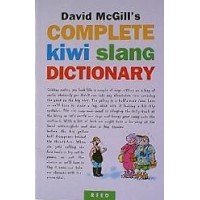
It's interesting to note that English-speaking countries speak differently. I'm sure you've heard about different accents like the British Accent or the American Accent. However, accents are less to worry about than the actual words they are speaking.

I'm talking about the "slang" words that common people use in their day-to-day lives in their country. The Philippines is pretty much Americanized. We are most familiar with American English than British English. However, there are a lot of English-speaking countries that do not speak "American English". Thus, if you want to really easily blend in, it pays to know some slang of the place of which you're heading.

As far as New Zealand goes, I find that they speak British English with a twist. Forget about the twist for now. Do take a look however, at their slang words because at one time, my Auntie from Michigan, USA came over here and there were a couple of occasions where she just can't understand what they're saying.

Check this site for some "Kiwi slang": http://www.chemistry.co.nz/kiwi.htm

Cheers mate!

Friday, June 6, 2008

New Zealand Government website

More online information about New Zealand can be found on the government's website: http://newzealand.govt.nz/.

It's got lots of information and links to related websites; just about what you'd hope for a government website should have. Gather as much information as you can and consider all parameters that matters to you so you could choose wisely whether you'd survive here or not.

It's also a good channel for which to learn about the culture as to how they do things here in NZ. Similarly, you should also check out websites like this for that particular country you're interested in.

Being new to a country and community, among the things you'd hate to have are gotchas or surprises all because you didn't do much of the necessary research up front.

Kia Ora!

Thursday, May 1, 2008

Living in Christchurch, NZ


The City of Christchurch, NZ is known as the "Garden City", and for good reasons. When I first came to New Zealand, I have no idea what to expect really. I have pre-conceived idea that maybe it'll look like Holland or Switzerland where you can find lots of green plains, wind mills, cows and sheeps. I can't even begin to imagine if their were buildings, how would it look like?

When I finally arrive, I told myself with absolute satisfaction, this I can live with!!!

Anyway, I find that the city of Christchurch is comparable to Lexington City in Kentucky. It's a very progressive and well-developed city but with lots of green gardens around, well adorned with flowers and huge trees. It's pretty calm and relatively quite. There are a lot of businesses around and food abound.

You can find a lot of information from the City Council's website: http://www.ccc.govt.nz/ and the Christchurch website: http://www.christchurch.org.nz/.

As regards to housing rates in terms of buying and renting, a descent house for 4 would normally cost around $250,000. As for apartments, here in NZ they call it flats, the weekly rental for a fully furnished house with 2 bedrooms usually costs around $300. If you're alone, a descent fully furnished room can be around $100 or even less. It's popular here for singles to share a house thus bringing down the weekly rental to just $50-$80 and some of which already include electricity and phone bills -- water is free. You can find more information here: http://www.ratesinfo.ccc.govt.nz/.

You can also check out a very informative site regarding money matters at http://sorted.org.nz/. You can use the calculator tool to calculate the house mortgage payments.

Regarding food or grocery; it's relatively cheap here in Christchurch. Some Kiwis from Auckland and Wellington do find that it's quite cheaper here -- maybe some but not all. At any rate, in relation to your income here, food is really not that expensive. You can get some idea by shopping online at http://www.foodtown.co.nz/HomeShopping/Shop.aspx, of course, you don't actually want to buy something, just browse around for the prices. The prices here might be a bit higher than the actual price and other stores like Pak n Save and Countdown, have even lower prices.

Our weekly budget for grocery, including baby food for our daughter, is $150. We really rarely exceed or even reach this limit. Mostly we just spend around $90 weekly. I can tell you, we're not really living that frugal. We usually buy Chinese take-away (take-out) or Subway or Pizza or Burger King meals every weekend. We also have fruits, veges, meat, milk and ginger beer ;-) all the time.

Friday, April 25, 2008

More opportunities for nurses

Here's another example where people can apply directly without going through recruiting agencies. Like I said before, it does not cost hundreds of thousands of pesos in order to go abroad. Don't rely on empty promises by many of these agencies; you might just be disappointed.

Just because many people are doing it doesn't mean you should too. A lot of people are not successful because they're doing the same things. We should learn from successful examples; even if they're out of the ordinary.

My wife and I came to NZ spending just a little over 30,000 pesos and our pocket money was around 20,000 pesos. 50,000 in total, yes, for both of us! For some recruiting agencies, this is just a processing fee so that your application will be accepted and considered.

I can only share what I know based on experience. I'm sure a lot of other people out there have other ways and I really want to encourage them, and you, to share and help each other.

In the news...

April 7, 2008 | 06:03 AM

Monday, April 21, 2008

Working in NZ

There are multiple ways of coming to NZ for work. There are some differences between categories and it's important that you know which category you most certainly fit.

I believe that the fastest way of coming here for work, is via the "Talent - accredited employer" category. This is the category I used in coming here. Basically, the hiring company has to be an NZIS (New Zealand Immigration Service) accredited for you to qualify in this category.

It works very simply and like I said, it's one of the fastest, easiest and cheapest way to come to NZ for work. You can find more information from the link below:

Immigration-Working-In-NZ-Accredited-Employers

Be sure to check out the list of accredited employers. Visit the company website and see if there are job postings there that you can apply and submit your application through there. Most companies will have job listings in their websites and the information on how to apply for them.

The company will contact you, usually via email, to arrange an interview with you or they may ask for more information about you or some referrals. The interview will usually be a phone interview. Take note that all of these correspondence between you and the company are off the POEA and OWWA's radars. The company might even send you here for a final interview, like what they did with me. It's easy, you just need a visitor's visa, which is free and again, you don't need to go through POEA nor OWWA for this.

Once the company will decide to hire you, they should give you a contract and working conditions document for you to sign. This is important as this will be needed when applying for the work visa. I will post separately regarding how to go about this.

There are also some good job search websites. One particularly popular here in NZ is www.seek.co.nz. Try searching here as well. Don't worry if you'll go through an agency, most of them take little commissions only and you can get out of the agency later if you can find a company that will hire you directly.

Differences between driving in New Zealand and in the Philippines


Remember to stay at the right side of the road, which is the left.

It's great to explore New Zealand on the road. It's also a necessity here if you want to easily go to places as they can be quite far apart. Although there is a comprehensive bus service, it can sometimes be very time-consuming. Anyway, owning a vehicle here is not a luxury, you can even drive one with no money down. However, driving here is quite different from driving in the Philippines. Here are the major differences:

(1) Keep left. They follow the British way of driving, which is driving at the left side of the road. Meaning the vehicle you'll be driving is right-hand drive. Driving on the left is a bit strange in the beginning but as you get more experience, like after a few days of driving, you'll easily adopt. It's not as hard as you might think.

(2) Special give way rule. All the roads here are clearly marked with signs to hint drivers as they pass by. It is especially important that you pay attention to these signs as they follow them here strictly. Unlike in the Philippines, as long as you don't hit anything or anybody, you're good to go. In the case of the give-way rule, if an intersection doesn't have a give-way sign, one must give way to all traffic coming from the right.

(3) Roundabout. They have here something similar to our "rotonda" there in RP, just like in Fuente Osmena in Cebu City. However, it's totally different as you need to apply the give-way rule; which basically means give-way to all traffic coming from your right. Also, always use your signal lights when turning; that includes when you're leaving the roundabout.

(4) Motorway. There is also what's called a "motorway", similar to an inter-state highway in the US. It's a high-speed driving area; up to 100 km per hour. It's got an entry and an exit ramp. It's not as elaborate or wide-spread as in the US; some even stretches for just a few kilometers but the concept is very close to that of an interstate.

You can find more information and the details on the internet about driving here in NZ. You can check out the following websites:

http://www.landtransport.govt.nz/roadcode/ - the New Zealand Road Code
http://www.aa.co.nz/Pages/default.aspx - Automobile Association NZ

Can I drive in NZ with my Philippine license? Yes. As long as your driver's license is current, you can use it to drive here in NZ for up to 12 months only. After the 12 months is over, you should get a NZ license. In order to get a NZ license, you must sit on two exams:

(1) short written test - takes about 20 to 30 mins
(2) practical test - takes about 1 hour

I would advice that you get an International Driver's Permit (IDP), also known as "international license" there in RP. They would not have any questions when you'll be converting it to a NZ license. It's actually not "converting" it but that's how they term it here. Remember, however, an IDP is not valid without your Philippine license, the plastic one, they don't honor the receipt here. It'll save you a lot of hassles to have a current driver's license and an IDP.

Use the first few months to gain experience in driving here in NZ and read and study the NZ Road Code. You can buy this book from any bookstore here for about $40. It contains everything you need to know and will definitely help you pass the written and practical exams. If you don't want to purchase the book, you can also get access to it online. The contents of the book are completely available online for free.

I also advice to drive in all driving conditions to better prepare for the exam. Like driving through highways, busy streets and the slower area in the suburbs.

Friday, April 18, 2008

Get informed before taking off

New Zealanders, also known as "Kiwis", use the internet heavily. You will find that some of the sites ranked on top 10,000 by Alexa.com are actually in New Zealand. Most of the businesses here have their own websites which are up-to-date and are very informative; most of which feature online shopping.

Here are some interesting NZ websites:

http://www.metroinfo.org.nz/
http://www.trademe.co.nz/
http://www.finda.co.nz/

For those wanting to come to visit, work or immigrate, you can always refer to the NZIS (New Zealand Immigration Service) website at: http://www.immigration.govt.nz/. You can find guides, fees, forms and many other information there. It's very up-to-date and relatively easy to use; it's easy enough to find the information you need.

I would highly recommend that before you decide on what country to fly to, you must do a thorough research about it. Especially the people, environment, prices of goods, rent, electricity, etc. -- the usual stuff for your day-to-day living.

Create a journal on your notebook as it's so easy to forget these stuff. It's also a nice way of doing a comparison among the countries you've researched so far.

Once you have a good idea of what you're getting in to, try and paint a picture of what your finances would be like depending on your circumstances. Like if you have a child or two, how much would you be spending for childcare, education; all that kind of stuff.

Based on your research, you can then better negotiate how much your salary would be in a prospect company. It's also an added bonus for you if you know some bits about the country you're going during the job interview as you might be asked what do you know about their country; it will show how interested you are.

So go ahead, do some web searching, read books and magazines. Also do ask around with your friends and relatives. Beware, however, people's impressions about the country they've been to are a result of their own experiences. Do not take it as if it's the reality. I've heard a lot of different stories about NZ when we were coming here; very diverse stories from good to bad to worse. The reality is, people see the same thing differently. One person may hate snow but one may party with it. One may hate to give-way to pedestrians but one may have no problem giving-way to anybody anytime even to cows, sheeps and ducks.